
Cite BOOK
Close the cite modalStyle
Format
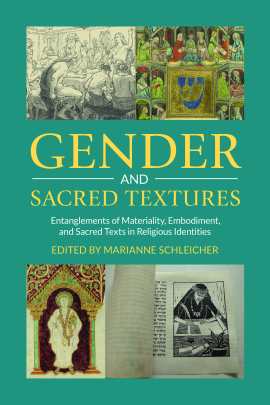
Gender and Sacred Textures
Toggle the cite modalEntanglements of Materiality, Embodiment, and Sacred Texts in Religious Identities
This anthology asks if - or how - the handling, use, and embodied enactments of sacred texts regulate, entangle, occlude, tolerate, or even subvert religious and gendered identities. While many studies have looked at the semantic content of sacred texts to answer this question, the volume mends a kn... Read more
Published: 2025
Pages: 208
eBook: 9781800505537
Paperback: 9781800505520
ePub: 9781800506602
Hardback: 9781800505513
This anthology asks if - or how - the handling, use, and embodied enactments of sacred texts regulate, entangle, occlude, tolerate, or even subvert religious and gendered identities. While many studies have looked at the semantic content of sacred texts to answer this question, the volume mends a knowledge gap by looking at the effects on gender that follow both from uses of sacred texts as directly accessible, material objects and from embodied enactments of sacred texts in indirect ways. To signify the embodied enactment of sacred texts, not directly at hand, Marianne Schleicher coins the term “sacred texture” in the introduction to extend sacred text studies to capture both the textuality of poetic and narrative expressions in oral cultures and how most lay people, often women, have expressed their religiosity through indirect uses of sacred texts through bodily enactments.
Among the insights this volume offers are how Old Norse women’s composition of oral sacred textures renders their gender fluid, how a sacred text in Numbers 5 is used to handle a woman and simultaneously bolsters the masculinities of the involved men, how Jewish women through centuries have been intelligible as such by enabling men’s direct access to sacred texts or by bodily enacting sacred textures themselves, how both Christian women and sacred texts should leave adornments behind to embody Jerome’s ascetic ideals, how four women in contemporary American Judaism write Esther scrolls according to halakhic rules to become intelligible as scribes despite their female gender, how American Evangelical women have compensated for the absence of a directly accessible Bible at work by bodily enacting fragments of the Bible, and how Muslim family members in Denmark bodily enact and navigate Qur’anic prescriptions on filial piety up against its prescriptions concerning the naked body.
£26.95
Add to basketPaperback
£26.95
Add to basketePub
£26.95
Add to basketHardback